
France’s 2027 budget: what changes for micro-entrepreneurs, and what doesn’t
On 1 October, the French government sent Parliament its draft budget for 2027, the PLF 2027 (projet de loi de finances), together with the draft social security financing bill, the PLFSS 2027 (projet de loi de financement de la sécurité sociale). Every autumn they spark a wave of alarming headlines. The short answer for a typical micro-entrepreneur: as the bills stand, almost nothing changes for you. Below is what stays the same, what changes and what to keep an eye on while the debates go on.
This article covers draft legislation. The text changes as Parliament debates it; the budget is meant to be passed by the end of December, but in each of the last two years it was not adopted until February. Correct as of 16 October 2026 — we will update this article as the debates progress. This is not tax advice.
First, a quick word on what these bills are. The PLF is the state budget: taxes, thresholds, tax breaks. The PLFSS is a separate law on social security finances: it sets the general rules for the contributions a micro-entrepreneur pays to URSSAF on their turnover. The actual rates for micro-entrepreneurs are set by a separate decree (article D613-4 of the French Social Security Code, Code de la sécurité sociale), but measures affecting them usually go through the PLFSS. Both bills are debated at the same time. In principle, the budget is passed by 31 December so that it applies from 1 January, but in each of the last two years it was late — more on that below.
Stays the same
- VAT exemption thresholds: €37,500 for services and €85,000 for sales
- Micro-entrepreneur turnover ceilings: €83,600 and €203,100, until the end of 2028
- Contribution rates for micro-entrepreneurs: unchanged in the bill
- E-invoicing timeline: issuing becomes mandatory on 1 September 2027
Changes
- Income tax brackets rise with inflation, as they do most years
- Micro-entrepreneurs in this summer’s wildfire areas: a reduced contribution rate for July–September 2026, on request
Watch until the final vote
- Amendments from MPs and senators
- The return of a single, lower VAT threshold
- A one-year waiting period for family and housing benefits for certain non-EU nationals
- The final vote and publication of the law
What stays the same
The VAT exemption threshold (franchise en base de TVA). In 2025, a cut to a single €25,000 threshold was actually passed into law but never applied: it was first suspended, then repealed by the law of 3 November 2025, which kept the existing thresholds: €37,500 of turnover for services (with a tolerance up to €41,250) and €85,000 for sales and accommodation (tolerance up to €93,500). The 2027 draft budget does not propose lowering them again.
The micro-entrepreneur turnover ceilings (plafonds du régime micro) — how much you can earn and still be a micro-entrepreneur: €83,600 for services and self-employed professionals (professions libérales), €203,100 for selling goods, food and accommodation. They are reviewed every three years; the current figures apply for 2026–2028.
Contribution rates. The PLFSS contains no measure changing the rates for micro-entrepreneurs — we went through every article.
E-invoicing. The budget does not touch the timeline: since 1 September 2026 every business must be able to receive e-invoices, and micro-entrepreneurs will have to issue them from 1 September 2027 for business-to-business (B2B) sales in France. For sales to private customers, they will send data to the tax authorities (e-reporting) instead of issuing an e-invoice. Full details in our e-invoicing article.
What changes
Income tax brackets will rise with inflation — by 2.1% under the bill. The bracket thresholds rise roughly in line with prices, so on the same income your tax does not go up. For a micro-entrepreneur this matters in two ways: the brackets set your household’s tax, and they also set the income limit for the versement libératoire (paying income tax as a percentage of turnover). The second effect only kicks in from 2028: the 2027 limit is already set at €29,579 per part (tax share), compared with your 2025 reference tax income (revenu fiscal de référence); if indexation goes through, the limit for 2028 will be about €30,200. If you are already trading, the deadline to opt in for 2027 passed on 30 September 2026. If you are registering now, you can still opt in until the end of the third month after you register.
Relief for businesses hit by the summer wildfires. It only applies to municipalities (communes) in Gironde, Landes and Var where an evacuation or a shelter-in-place order (confinement) was issued because of the wildfires in summer 2026.
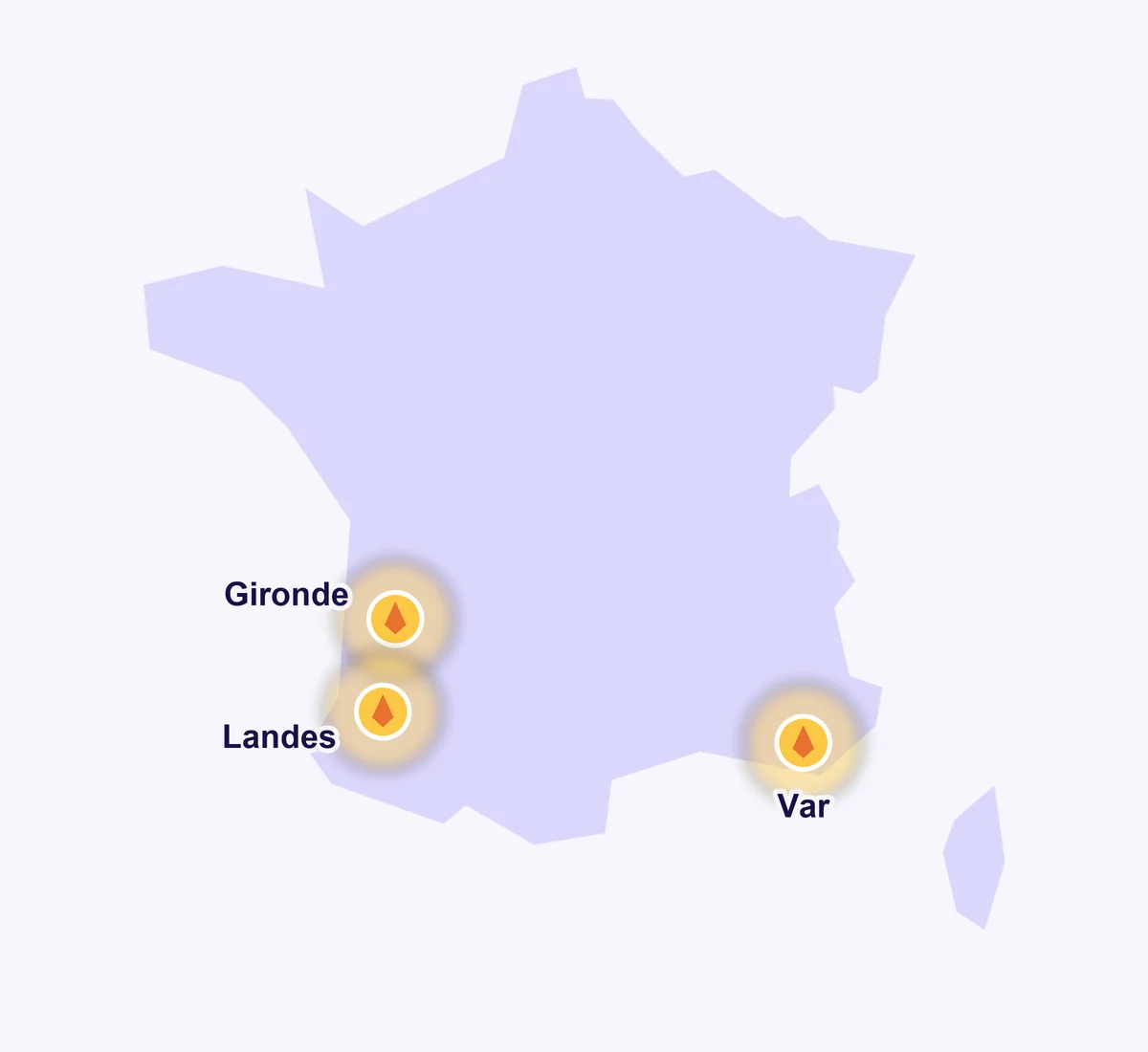
- Contributions (PLFSS, article 4). Micro-entrepreneurs would get a reduced rate on turnover for July–September 2026 — on request, and only if turnover for those months fell compared with the same period of 2025. The recalculation will happen in 2027, and any overpayment will be refunded or credited by 31 October 2027 at the latest. The rate itself (different for each type of activity) and how to apply will be set by decree. In addition, contribution payments for August–October 2026 in these municipalities are deferred to 30 November 2026 with no late-payment penalties. One caveat from the bill’s explanatory notes: if you had no turnover at all in those months, the reduced rate is of no use — there was nothing to pay contributions on.
- CFE (cotisation foncière des entreprises, the local business tax) and property tax (taxe foncière) (PLF, article 14). A reduction of 2026 taxes is proposed for businesses with fewer than 250 employees whose July–September 2026 turnover fell by at least 20% compared with the same period of 2025.
If you work in one of these municipalities, there is nothing to apply for yet: the measures have not been passed. Keep your bank statements and turnover declarations for July–September 2025 and 2026 — they will show the drop in turnover for both the reduced contribution rate and the CFE reduction.
What to watch until the final vote

Amendments. During the debates, MPs and senators table hundreds of amendments, some of which concern micro-entrepreneurs. One example is the idea of a single, lower VAT exemption threshold: it was passed and then repealed in 2025, it came back in the draft 2026 budget in autumn 2025, and MPs removed it. It is not in the current text, but an amendment could bring it back. Until an amendment passes the final vote, it is a proposal, not the law.
A committee vote against the text is not the end. On 9 October, the National Assembly’s finance committee rejected the first part of the bill, on revenue (recettes). That vote is not binding: in the chamber, MPs debate the government’s original text, and then it goes to the Senate.
Where the debates stand (16 October). Since 13 October, the budget bill has been debated in the National Assembly chamber. The article on indexing the tax brackets was adopted with amendments, and the 2.1% indexation was kept; article 14 on the CFE has not been reached yet. The PLFSS goes to the chamber on 20 October.
Family benefits for non-EU nationals. Article 37 of the PLFSS proposes a one-year wait for some family benefits: you could only receive them after a year of legal residence in France. According to the bill, this does not apply to EU citizens, refugees, people with subsidiary protection or stateless people, nor to anyone guaranteed equal treatment by EU law or an international agreement; the disabled child allowance (AEEH), the sick child carer allowance (AJPP) and the allowance on the death of a child are not affected. The measure is mainly aimed at recent arrivals without the right to work: according to the government’s explanatory notes, holders of a permit that allows them to work are not meant to be affected — although the article itself does not spell this out. British nationals resident under the Withdrawal Agreement are likely to fall under the equal-treatment exception; US, Canadian or Australian nationals generally do not. However, the same one-year residence condition would extend to housing benefits (APL, ALF, ALS), with no exceptions — not even for refugees. It is due to take effect by 1 July 2027 at the latest — we are following the text.
The final text. In principle, the budget law is passed by 31 December. In the last two years it was not: the 2026 budget was only adopted on 19 February 2026, and until then a stopgap law (loi spéciale) applied and taxes were collected under the old rules — which also delays the indexation of the brackets. If the final text includes something important for you, we will update this article and cover the changes in our monthly calendar.
What to do now
- Nothing urgent: plan 2027 under the current rules.
- If your turnover is close to €37,500 (services) or €85,000 (sales), keep an eye on it now: the VAT thresholds still apply.
- If you work in a municipality in Gironde, Landes or Var that was evacuated or under a shelter-in-place order, keep your bank statements and declarations for July–September 2025 and 2026.
- Get ready to issue e-invoices from 1 September 2027: you will need an approved platform (plateforme agréée).
The two thresholds people keep mixing up — VAT and the micro-regime — are explained in our guide to micro-entrepreneur surprises, point 7.
Correct as of 16 October 2026. Sources: PLF 2027 file on the National Assembly website (bill no. 3210); summary table of PLF and PLFSS 2027 measures; PLFSS 2027, annex 9, articles 4 and 37; PLFSS 2027 text; PLFSS 2027 file; law no. 2025-1044 of 3 November 2025 (VAT thresholds); law no. 2026-103 of 19 February 2026 (2026 budget); service-public, micro-regime limits. These are bills: until final adoption, any provision may change.
Not sure whether this affects you?
Tell me what you do, your turnover and where you work. I will tell you what in the 2027 budget matters for you.
Want your whole situation looked at?
Mentoring covers the whole path: from registration to reporting and choosing your tools.
You might also like
Micro-entrepreneur calendar: what to do in November 2026
November 2026 for micro-entrepreneurs in France: DES by the 13th, CFE notice and direct debit by the 30th, October declaration, 2026 starters.
E-invoicing: from 1 September 2026 everyone must be able to receive them, micro-entrepreneurs included
Facture électronique from 1 September 2026: every French business must receive e-invoices. What micro-entrepreneurs must do, deadlines, which platform to pick.
Guide: micro-entrepreneur surprises — 10 things people find out too late
A customs filing when your client is an EU company, CFE with no paper notice, VAT you owe on Google Ads, a fine for a zero declaration: ten micro-entreprise duties people learn about too late.